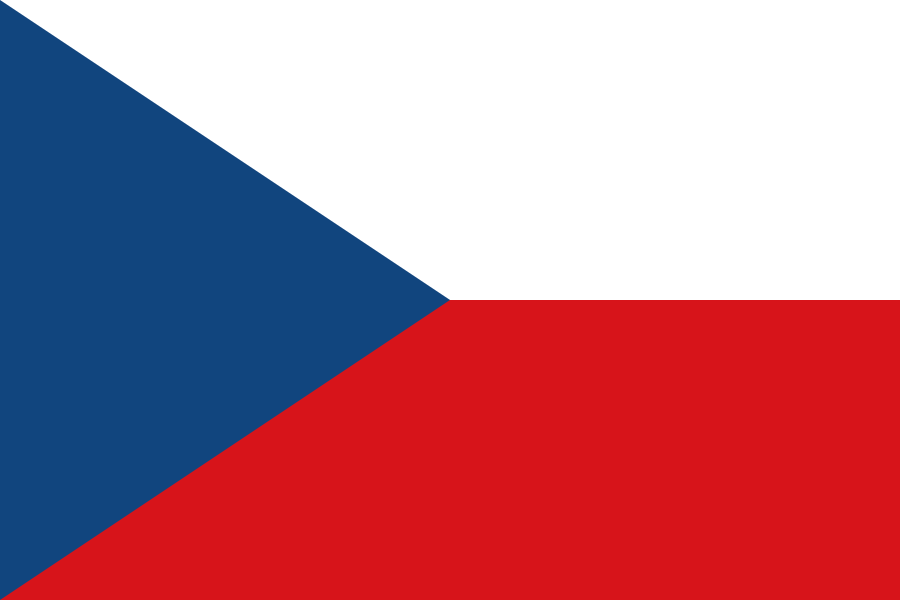
Havel90: Czech Republic Celebrates Václav Havel’s Legacy
Events across Czechia mark the 90th anniversary of Václav Havel’s birth and introduce a new generation to the playwright, dissident and president who helped shape the country’s modern history.


Across the Czech Republic, October 2026 is bringing renewed attention to one of the most important personalities in modern Czech history: Václav Havel. The nationwide commemoration (připomínka) marks what would have been Havel’s 90th birthday on 5 October, with exhibitions, public discussions, theatre performances, films and educational programmes taking place in Prague and many other Czech cities. The anniversary offers visitors and Czech language learners an opportunity to discover not only Havel himself but also the political and cultural transformation that created the modern Czech Republic. Fifteen years after his death in December 2011, his ideas about democracy, personal responsibility and freedom remain part of public discussion in Czechia.
Havel was born in Prague on 5 October 1936 into a prominent family with strong connections to Czech cultural life. After the communist takeover of Czechoslovakia in 1948, his family background made access to higher education difficult, and he eventually became increasingly involved in theatre and literature. During the communist period, he developed from a successful playwright into a leading dissident (disident) who openly criticized the political system and defended human rights. His transformation from writer to political opponent and eventually president makes his life closely connected with several of the most important events in twentieth-century Czech history.
Havel became internationally known during the 1970s and 1980s for challenging the communist authorities and supporting people whose rights had been restricted by the state. He was one of the leading figures associated with Charter 77, a civic initiative that criticized the Czechoslovak government for failing to respect human rights commitments. His political activities led to surveillance, repeated arrests and periods of imprisonment, but they also made him an increasingly important symbol of opposition to the regime. The political upheaval (převrat) of 1989, known as the Velvet Revolution, eventually brought an end to more than four decades of communist rule and transformed Havel from an opposition figure into the country's head of state.
Understanding Havel also requires understanding the political environment in which he worked. Communist Czechoslovakia had strict controls over public speech, publishing, political organization and much of cultural life. Totalitarianism (totalitarismus) was a subject Havel explored not only as a political activist but also as a writer interested in how political systems influence ordinary human behaviour. His essays frequently examined what happens when individuals accept official language and rituals that they privately know are false, and why refusing to participate in such behaviour can become a form of political resistance. These ideas remain central to discussions of Havel because they explain why his political philosophy focused so strongly on individual responsibility.
The Havel90 programme reflects the unusually broad role Havel played in Czech society. The anniversary is not limited to formal ceremonies but includes theatre, photography, literature, public debates, exhibitions and projects aimed at school students and younger generations. His political legacy (odkaz) is therefore being presented alongside his work as a dramatist and essayist, reminding audiences that Havel was a cultural figure long before he entered the presidential office. Events are taking place not only in Prague but also in towns and cities across the country, making the anniversary a nationwide cultural programme rather than simply a celebration centred on the capital.
Several exhibitions focus on the underground intellectual and cultural environment that existed during communist rule. Books and essays that could not pass official censorship were often copied privately and circulated through unofficial networks rather than conventional publishing houses. This system, usually known internationally by the Russian-derived word samizdat (samizdat), played an important role in allowing forbidden political and literary texts to reach readers in Czechoslovakia. Havel's own works circulated through these networks, and exhibitions connected with the anniversary help visitors understand how literature could function as an alternative public space when normal political debate was heavily restricted.
Havel's most influential political writings dealt less with conventional party politics than with the relationship between truth, responsibility and everyday life. He argued that authoritarian systems could survive partly because ordinary people learned to behave publicly as though they accepted claims they did not actually believe. Refusing to participate therefore became, in his thinking, a matter of personal conscience (svědomí) as much as organized political opposition. This approach helps explain the lasting appeal of Havel's writing beyond the Czech Republic, since his arguments concern the moral choices individuals make when institutions pressure them to conform.
Visitors discovering Havel through the anniversary events may also be surprised by how important theatre was to his life. Before becoming president, he had already built an international reputation as a playwright (dramatik) whose works used absurd situations, repetitive language and bureaucratic conversations to expose the strange logic of authoritarian institutions. Plays such as The Garden Party, The Memorandum and Audience became important examples of modern Czech drama. His theatrical background later influenced his political communication, which often relied on language, symbolism and carefully staged public moments rather than the vocabulary of a conventional career politician.
The central date of the 2026 programme is 5 October, the 90th anniversary of Havel's birth. Events surrounding the date include exhibitions, performances, public conversations and educational activities dealing with democracy, information, media, artificial intelligence and the responsibilities of citizens in contemporary society. Many programmes emphasize civic (občanský) responsibility, a concept closely associated with Havel's belief that democracy cannot depend exclusively on governments and institutions. For Czech learners, these events can also provide useful exposure to contemporary political and cultural vocabulary while placing that language in a historical context.
Prague remains the most important location for exploring Havel's life because many places associated with his biography are located there. Special exhibitions and installations are appearing around the city, while Václav Havel Airport Prague is also participating in the anniversary programme and introducing travelers to places connected with his life. The symbolism (symbolika) of encountering Havel immediately upon arriving in the Czech capital is particularly strong because the airport has carried his name since 2012. Visitors passing through the airport can therefore begin learning about one of the country's best-known modern figures before they even reach central Prague.
Havel's presidency began in an extraordinary period of political transformation. He was elected president of Czechoslovakia in December 1989, only weeks after the Velvet Revolution, and later became the first president of the independent Czech Republic in 1993. One of the recurring themes of his presidency was reconciliation (usmíření), particularly the difficult task of helping a society emerging from dictatorship discuss responsibility for the communist period without simply reproducing new forms of hatred and division. He also strongly supported the country's return to democratic Europe and the development of close relationships with Western democratic institutions.
The continuing interest in Havel is especially visible in the geographical spread of the Havel90 programme. Exhibitions and cultural projects are scheduled in locations including Prague, Brno, Tábor, Beroun, Kladno, Varnsdorf, Pardubice, Ostrava and many smaller Czech communities. This nationwide participation demonstrates the resilience (odolnost) of Havel's reputation more than three decades after the fall of communism. Some exhibitions concentrate on his political life, others on experimental poetry, architecture or theatre, while programmes for young people ask how ideas connected with freedom and responsibility can be applied to the challenges of the twenty-first century.
For travelers visiting Czechia in October 2026, the anniversary provides an unusual way of exploring the country through recent history rather than only through famous monuments. A trip to Prague Castle, a local library exhibition, a theatre production or one of the anniversary events can add historical context to places that visitors might otherwise see simply as tourist attractions. The concept of remembrance (vzpomínání) is particularly important in Czech public culture because twentieth-century history included Nazi occupation, communist dictatorship, political repression and the peaceful democratic transformation of 1989. Learning how these events are remembered can therefore reveal as much about contemporary Czech society as visiting a museum devoted to older historical periods.
For students of Czech, Havel is also valuable because his life introduces vocabulary connected with government, history, literature and civil society. Reading about the Velvet Revolution naturally leads to words concerning demonstrations, freedom, censorship, elections and political institutions, while his theatrical career introduces a completely different group of cultural expressions. The unusual intersection (průsečík) between these worlds is one reason Havel remains such a useful figure through whom foreigners can approach Czech culture. Few personalities combine literature, underground political activity, democratic revolution and national leadership so directly.
Havel's 90th anniversary is therefore more than a historical birthday celebration. It is an opportunity for Czech society to reconsider ideas about democracy, personal responsibility and the relationship between individuals and political power. His continuing relevance (aktuálnost) is visible in anniversary discussions that connect his writings with modern subjects including disinformation, media, technology and artificial intelligence. For foreign residents, visitors and language learners, following the Havel90 events offers a particularly rich introduction to the experiences and debates that helped create contemporary Czechia.
Key czech Vocabulary
připomínka — commemoration
disident — dissident
převrat — upheaval
totalitarismus — totalitarianism
odkaz — legacy
samizdat — samizdat
svědomí — conscience
dramatik — playwright
občanský — civic
symbolika — symbolism
usmíření — reconciliation
odolnost — resilience
vzpomínání — remembrance
průsečík — intersection
aktuálnost — relevance
For requests or suggestions: pr@learncesky.org

Learn the official language of the Czech Republic in 30 days thanks to the most complete Grammar, Vocabulary and Culture courses available.
Start speaking today!
© 2026 All rights reserved


